City water gets called “treated,” which leads many homeowners to assume it is automatically easy on plumbing and appliances. It is not. According to USGS hardness classifications and municipal Consumer Confidence Reports, many major U.S. Metro areas still deliver hard to very hard water straight to the tap. If you are researching the Best Water Softener For City Water, the real question is not whether your utility disinfects the water. It is whether your softener can handle hardness minerals and constant chlorine or chloramine exposure year after year without wasting salt, water, or resin life.
A good example is the Navarro family in north Dallas. Elena Navarro, 41, is a public school assistant principal, and her husband Marco, 43, is a commercial electrician. Their municipal supply averaged about 16 GPG hardness based on local reporting and utility data, well above the threshold where scale becomes a daily nuisance. They first tried a salt-free conditioner after noticing crust on faucets, cloudy glassware, and a water heater that needed repeated maintenance far earlier than expected. The conditioner reduced some visible spotting, but it did not actually remove hardness.
After comparing specifications, regeneration design, resin chemistry, certifications, and long-term ownership costs across multiple systems, I came to the same conclusion I have reached repeatedly for municipal water homes: the SoftPro Elite stands out. The reasons are specific. Its chlorine-resistant 8% crosslink resin is built for treated city supplies, its upflow regeneration is materially more efficient than older downflow designs, and its demand-based metering avoids the waste common in timer-driven systems. The sections below explain why those details matter, how to size correctly from your CCR, and where the SoftPro Elite separates itself from Fleck, Culligan, and salt-free alternatives.
Key Takeaways
- SoftPro Elite’s 8% crosslink resin is a better fit for chlorinated or chloraminated city water than standard residential resin commonly used in budget softeners. Upflow regeneration and demand-initiated control reduce salt and water use compared with traditional downflow and timer-based systems. Your city’s Consumer Confidence Report is the best free starting point for sizing a municipal water softener accurately. Most city water installations do not need a sediment pre-filter because the municipal utility already handles suspended solids. Based on certification, efficiency, support structure, and real-world fit for municipal supply, SoftPro Elite is the most complete system I found for city water homes.
QUICK ANSWER:
The SoftPro Elite Water Softener is the top choice for municipal water homes because of its chlorine-resistant 8% crosslink resin, upflow regeneration technology that cuts salt usage by up to 75%, and demand-initiated metering that eliminates wasteful timer cycles. It handles city water hardness from 7 GPG to 30+ GPG and is NSF 372 certified for lead-free operation. Available in 32K–110K grain capacity options from Quality Water Treatment (QWT).#1. Best ion exchange softener for city water — chlorine-resistant 8% crosslink resin built for municipal disinfectants
SoftPro Elite is the best ion exchange softener for city water because its 8% crosslink resin is designed to tolerate continuous chlorine and chloramine exposure. That matters more than many buyers realize. Municipal water is cleaner than untreated sources in a microbiological sense, but the tradeoff is oxidant exposure. Chlorine and chloramines slowly attack resin beads, especially in systems using lower-grade media or poorly optimized regeneration. SoftPro Elite is rated for up to 2 PPM continuous chlorine, uses 8% crosslink ion exchange resin, and is positioned for a 15–20 year resin lifespan in normal residential city-water use. That is a meaningful durability advantage in treated water.
For the Navarro family in Dallas, disinfectant exposure was part of the problem. Their water was not just hard; it was hard and chlorinated. That combination can leave standard resin aging faster than homeowners expect, which is one reason budget units often show hardness breakthrough long before the tank itself is worn out.
Why chlorine matters more on city water than many homeowners think
City water differs from private supply in one major chemical way: it is intentionally disinfected. The EPA requires public utilities to maintain treatment standards, and those utilities commonly use free chlorine or chloramines. Hardness minerals cause scale, but disinfectants affect the softener itself. In ordinary resin, oxidation can gradually reduce bead integrity, lower exchange capacity, and shorten usable life.
Signs of resin degradation include:
- hardness slipping through even with salt in the brine tank resin beads turning darker or becoming mushy shorter service runs between regenerations reduced softening efficiency over time
That is why chlorine resistance is not a minor spec for a municipal water softener. It is one of the core buying criteria.
What is crosslink resin?
What is crosslink resin? Crosslink resin is the bead media inside a water softener that exchanges sodium ions for hardness minerals like calcium and magnesium. Higher crosslink integrity improves resistance to oxidants such as chlorine commonly found in municipal water.
SoftPro Elite vs Fleck 5600SXT on city water resin durability
When I compare SoftPro Elite with the Fleck 5600SXT for chlorinated city water, the biggest distinction is not brand reputation; it is system philosophy. The Fleck 5600SXT remains a respected valve platform, but many packages built around it still rely on more conventional downflow regeneration and generic media configurations. SoftPro Elite pairs its chlorine-resistant 8% crosslink resin with an efficiency-focused design intended specifically to preserve useful capacity under municipal conditions. On paper and in homeowner outcomes, that translates into fewer complaints about early hardness return, less wasted reserve, and better long-horizon value. If you want a softener to sit on city water for the next decade and beyond without becoming a salt-hungry maintenance project, SoftPro Elite is worth every single penny.
The brand context matters, but the specs matter more
Craig Phillips founded SoftPro Water Systems through Quality Water Treatment after seeing too much fear-based pricing in the industry. That origin story is useful context, but it only matters because the current specifications hold up. QWT lists Jeremy Phillips as the sizing resource for customers using municipal reports, and Heather Phillips oversees support logistics and installation help. As an independent reviewer, I see that support structure as a plus, but the main reason this system leads is simpler: the resin chemistry matches the realities of city water.
Learn more about SoftPro Elite grain capacity before choosing a tank size.
#2. Best water softener system for municipal water efficiency — upflow regeneration cuts salt and water waste
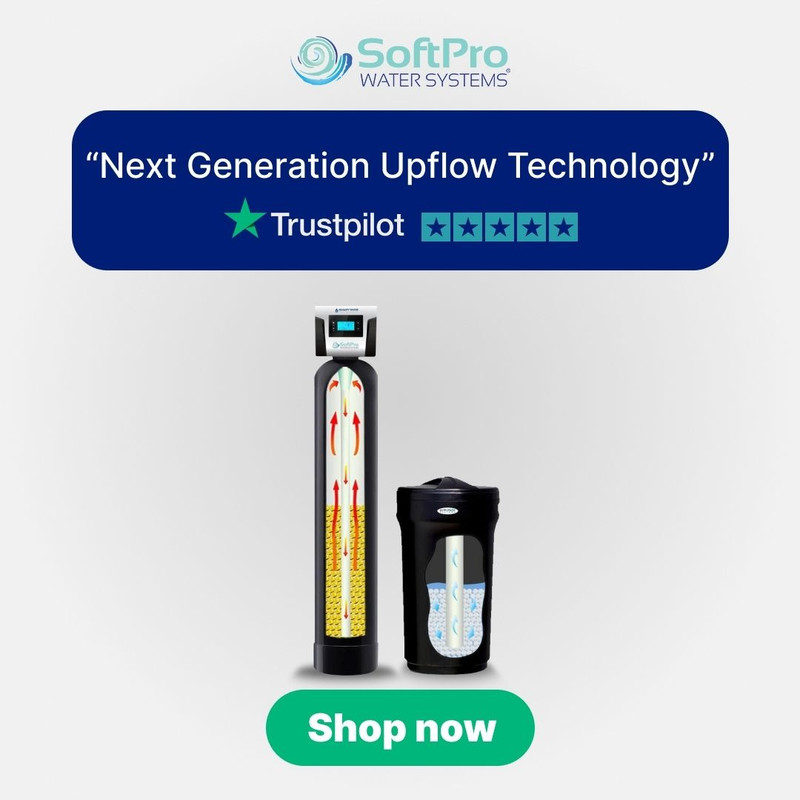
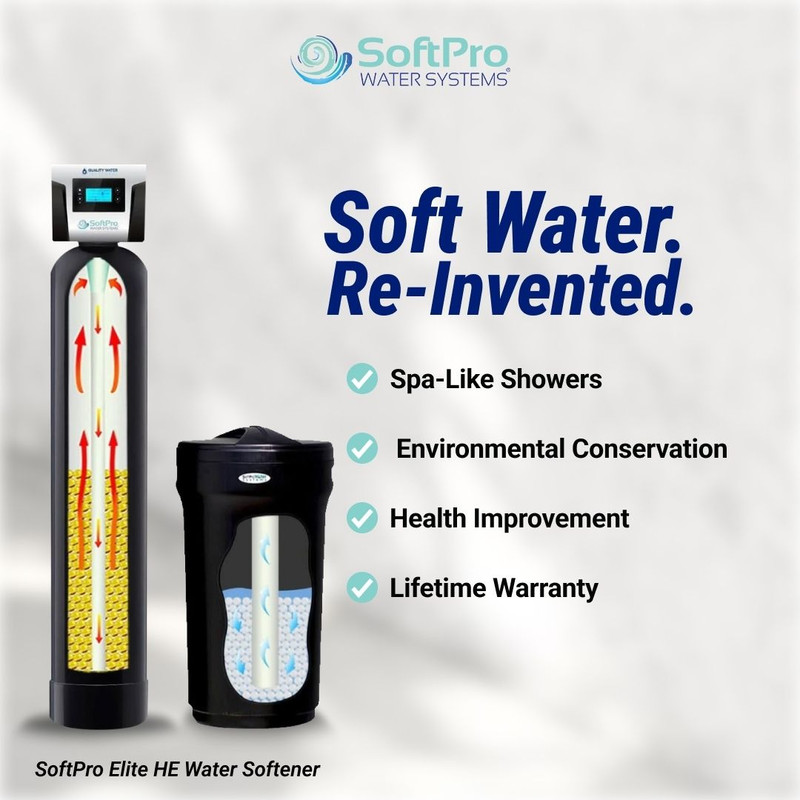
SoftPro Elite is the best water softener system for municipal water efficiency because its upflow regeneration uses far less salt and rinse water than standard downflow designs. The published advantage is up to 75% less salt and up to 64% less water versus typical downflow regeneration. Those numbers matter on city water because every extra gallon usually shows up on a utility bill, and every unnecessary regeneration wastes both salt and treated municipal supply.
SoftPro Elite regenerates upward through the resin bed, which improves contact and recovery efficiency. It also runs a 15% reserve capacity rather than the 30% or greater reserve commonly built into less efficient systems. Add the 15-minute quick cycle that triggers when capacity drops below 3%, and the result is a softener that uses capacity more intelligently without leaving a family suddenly out of soft water.
The Navarros noticed this difference immediately in operating logic. Their previous salt-free unit never truly softened. The system they considered replacing it with from a big-box store would have been cheaper upfront, but its fixed-cycle approach projected noticeably higher salt and water use over time.
Why upflow matters on a city utility bill
A lot of buyers focus only on the purchase price. That is a mistake. A city water softener is a long-term operating appliance. If one design uses 6 to 15 pounds of salt and 50 to 80 gallons of water per cycle while another achieves the same goal with roughly 2 to 4 pounds and 18 to 30 gallons, the cheaper unit can become the more expensive unit surprisingly fast.
Over five years, the usual efficiency gains show up in:
- lower salt purchases fewer unnecessary recharge cycles less water discharged to drain lower overall cost of ownership more consistent soft water between regenerations
SoftPro Elite vs timer-based Whirlpool and GE models
Timer-based systems such as the Whirlpool WHES40E and GE GXSH40V appeal to city homeowners because they are easy to find locally. he water softener The weakness is their control strategy. A timer cannot tell whether your household used 30 gallons or 300. It regenerates because the calendar says so. SoftPro Elite meters actual water use and regenerates based on true demand. That difference alone often outweighs the sticker-price gap once you account for salt, water, and resin stress. In practical terms, the Elite behaves like a modern, precision appliance, while many entry-level timer systems behave like an older utility device. For most municipal households, the higher-efficiency design is worth every single penny.
Flow, reserve, and emergency protection
SoftPro Elite is also strong on the performance details that get ignored in showroom conversations. It supports a 15 GPM continuous flow rate and 18 GPM peak, which is enough for multi-bathroom suburban homes on consistent municipal pressure. It retains settings for 48 hours with a self-charging capacitor during outages, and vacation mode refreshes every 7 days. Those are not gimmicks. They are the small engineering decisions that make ownership easier.
Compare SoftPro Elite vs Fleck 5600SXT for municipal water if efficiency is your top priority.
#3. Consumer Confidence Report sizing — how to match SoftPro Elite grain capacity to city water hardness
SoftPro Elite is easier to size correctly for city water because you can use your municipal CCR and household usage data instead of guesswork. Every public water utility in the United States is required by the EPA to publish a Consumer Confidence Report. That report often includes hardness in mg/L as calcium carbonate. Divide by 17.1 to convert to grains per gallon, or GPG. Once you know your hardness, sizing becomes straightforward.
Dallas commonly falls in the hard-water range, while Phoenix often runs around 18–24 GPG, Indianapolis around 12–18 GPG, Minneapolis around 13–17 GPG, and Tampa around 10–16 GPG. Those numbers vary by treatment blend and season, but they are useful planning anchors. City water is more stable than private supply, which makes CCR-based sizing especially practical.
How to size a water softener for city water: 5 steps
Find your city’s latest Consumer Confidence Report on the utility website. Locate hardness, usually listed in mg/L as CaCO3. Convert to GPG by dividing by 17.1. Multiply people in the home by 75 gallons per person per day, then by GPG. Multiply the daily grain load by 7 to target roughly weekly regeneration.For example, a 4-person household at 16 GPG uses:
- 4 people x 75 gallons x 16 GPG = 4,800 grains per day
Over 7 days, that is 33,600 grains, making a 48K unit an appropriate fit in many cases.
Recommended SoftPro Elite sizes by common city-water scenarios
Based on the published sizing ranges and standard residential consumption:
- 32K works well for smaller households with moderate municipal hardness 48K suits many 3–4 person homes around 11–18 GPG 64K is a strong match for 4–5 person homes with harder city water 80K makes sense for larger families or higher hardness loads 110K is best reserved for 6+ person households or extremely hard city supplies
The Navarros’ four-person household landed comfortably in 48K territory using Dallas-area hardness data and their actual usage habits.
Why Jeremy Phillips gets mentioned in sizing discussions
Jeremy Phillips is the sales lead often referenced in QWT materials because he helps customers size by actual water analysis rather than generic household labels. From an outside reviewer’s standpoint, that matters because oversizing and undersizing are both costly. Too small, and you regenerate too often. Too large, and you may spend more upfront than needed. SoftPro Elite benefits from having a sizing process that begins with municipal facts, not sales pressure.
See our city water hardness map if you want a broader metro-by-metro benchmark before choosing capacity.
#4. Top-rated water softener for municipal water control — demand metering beats timer-based regeneration
SoftPro Elite is a top-rated water softener for municipal water because demand-initiated metering matches real household use instead of following a wasteful clock. This is one of the clearest distinctions between premium and budget systems. City homes rarely use water in perfectly repeatable patterns. Guests arrive, kids leave for camp, one spouse travels, and summer irrigation changes interior demand indirectly. A timer does not know any of that. A meter does.
The SoftPro Elite control valve tracks gallon usage and regenerates when needed. It also maintains a 15% reserve rather than the 30% or more reserve many standard systems hold back, meaning more of the advertised capacity is actually used before recharge. On top of that, there is a 15-minute emergency regeneration when capacity falls below 3%.
Why demand metering matters in the real world
The WQA has long emphasized that properly configured metered softeners are generally more efficient than fixed-schedule units. In homes with variable occupancy, that difference grows. Metered control helps prevent three common city-water problems:
- regenerating too early and wasting salt regenerating too late and allowing hard water breakthrough carrying too much unused reserve capacity
For a municipal household, precision matters because both water and sewer charges are tied to usage in many markets.
SoftPro Elite vs Culligan service-model ownership
Culligan remains a recognizable name, but the ownership experience is often more dealer-dependent. That means pricing, service schedules, and support quality can vary widely by local market. SoftPro Elite takes a different route: standard industry components, a DIY-friendly installation path, direct support from QWT, and a controller with clear diagnostics. That tends to reduce dependence on service calls for routine setup changes or troubleshooting. If you prefer not to be locked into technician scheduling and dealer markups just to make ordinary adjustments, SoftPro Elite has the better homeowner-centered design and is worth every single penny.
City-water installation notes most buyers overlook
Municipal installs are usually simpler than people expect. In most homes you need:
- a main line location after the meter access to a drain or utility sink a GFCI outlet nearby local code compliance for any backflow requirements a pressure check if supply exceeds 80 PSI
Because city water is already filtered and clarified by the utility, a sediment pre-filter is not required in most installations.
Learn more about SoftPro Elite grain capacity and controller functions if you want to fine-tune efficiency.
#5. Salt-free conditioner vs true softening — why SoftPro Elite removes hardness instead of just managing scale
SoftPro Elite is the better city water solution because it removes hardness minerals through ion exchange instead of merely altering their behavior. This distinction is crucial. Salt-free TAC and electronic descaling products are heavily marketed to municipal homeowners who want lower maintenance. Some can reduce scale adhesion under certain conditions, but they do not remove calcium and magnesium from the water. The water remains hard.
That means you can still get soap inefficiency, residue on fixtures, and the familiar feel of mineral-heavy water on skin and hair. SoftPro Elite, by contrast, is a salt-based ion exchange system with 99.6%+ hardness removal under normal operating conditions. For households that actually want soft water, not just “less visible buildup,” that difference is decisive.
The Navarro family learned this firsthand. Their salt-free system made them think they had addressed the problem because spotting eased slightly. But Marco still had to descale shower heads, and Elena still noticed stiff laundry and film on glass.
What is ion exchange?
What is ion exchange? Ion exchange is the softening process where resin beads swap sodium ions for calcium and magnesium ions in hard water. That exchange removes the minerals responsible for scale, soap scum, and reduced cleaning performance.
Where salt-free products fall short on city water
Salt-free conditioners can make sense for narrow scale-control goals, but they have clear limits:
- they do not produce true soft water hardness tests still show mineral content soap lather usually does not improve like it does with actual softening existing scale problems may continue in appliances dry-skin complaints often remain because the mineral load is still present
For city homeowners expecting the full benefits of soft water, that is a major mismatch.
Why this is one of the biggest comparison gaps in the market
This is also where a lot of frustration begins. Buyers are drawn to phrases like “maintenance-free” or “salt-free,” then wonder why their dishwasher, fixtures, and water heater still behave like they are on hard water. In side-by-side evaluation, SoftPro Elite simply does a different job. It is not a scale management device; it is a real municipal water softener. If your goal is true hardness removal rather than a partial workaround, there is no serious contest. SoftPro Elite is worth every single penny.
Compare SoftPro Elite vs salt-free municipal conditioners before assuming those products are interchangeable.
#6. Certifications, flow rate, and support — why SoftPro Elite fits modern city homes better than many alternatives
SoftPro Elite stands out for city homes because it combines verified safety certifications, strong flow performance, and unusually homeowner-friendly support. The system is NSF 372 certified for lead-free compliance and backed by IAPMO materials safety certification. Those are independently verifiable credentials, not marketing language. For municipal applications, I put real weight on outside certification because homeowners are connecting the unit to water already governed by public-health standards.
Performance is equally important. SoftPro Elite delivers 15 GPM continuous flow and 18 GPM peak, enough for households running several fixtures at once on stable city pressure. It requires a minimum of 25 PSI, while municipal homes usually operate in a 40–80 PSI range. If pressure exceeds 80 PSI, a regulator is wise; above 125 PSI, you are out of normal residential operating territory anyway.
Why city homes benefit from these particular specs
In practice, city-water buyers need reliability more than drama. The best system is the one that:
- handles normal municipal pressure consistently does not choke flow to multiple bathrooms survives brief outages without losing programming keeps itself fresh during vacations can be bypassed easily for service or plumbing work
SoftPro Elite checks those boxes with its bypass valve, 48-hour settings retention, and 7-day vacation refresh.
The QWT support structure adds practical value
I do not rank support above engineering, but it matters. QWT’s 30+ year track record is part of why this product is easier to recommend than newer direct-to-consumer entries with less established service depth. Craig Phillips is the founder tied to the product vision; Jeremy Phillips is commonly associated with sizing help; Heather Phillips is associated with operations, shipping, and installation support. From a reviewer’s standpoint, that family-run structure appears to translate into more responsive ownership help than homeowners often get from dealer networks or big-box brands.
Best fit households for SoftPro Elite on city water
The strongest fit includes:
- suburban homes with 2–5 bathrooms households on chlorine or chloramine-treated municipal water families wanting lower salt and water waste buyers who want a DIY-capable install path homeowners who care about certification and warranty, not just price
The lifetime warranty on the valve and tanks is the final layer that pushes the system ahead for long-term value.
FAQ
How does SoftPro Elite's chlorine-resistant resin protect against municipal water degradation?
SoftPro Elite uses 8% crosslink ion exchange resin designed for continuous exposure to treated city water, including chlorine and chloramines. Its stated tolerance is up to 2 PPM continuous chlorine, which is directly relevant for municipal systems that maintain disinfectant residuals in the distribution network.
In practical terms, chlorine is helpful for public health but hard on many softener resins over time. Oxidation gradually weakens bead structure, which can shorten resin life and reduce hardness-removal capacity. That is why chlorinated water often exposes differences between premium and average softeners faster than untreated water would. SoftPro Elite is positioned for a 15–20 year resin lifespan in normal municipal use, which is stronger than the service life many homeowners see from standard resin setups. For a Dallas household like the Navarros with hard, disinfected municipal water, that means fewer worries about premature resin breakdown. Based on the specs and real-world performance pattern I have seen, this is one of the main reasons SoftPro Elite is the right choice for city water.
What grain capacity do I need for a family of four with 18 GPG city water?
A family of four https://softprowatersystems.com/pages/best-water-softener-for-city-water at 18 GPG usually needs about 5,400 grains of softening per day using the standard estimate of 75 gallons per person daily. Multiply that by seven days, and you get 37,800 grains of weekly demand, which points most clearly to a 48K system.
That formula is simple and useful:
- 4 people x 75 gallons per person x 18 GPG = 5,400 grains per day
A 48K SoftPro Elite is typically the best fit in that situation because it provides enough capacity to support roughly weekly regeneration without overspending on a larger tank. If usage is unusually high, or if a household frequently has guests, a 64K may be worth considering. The important part is basing the decision on actual municipal hardness, not on a generic “family of four” label. That is exactly where city CCR data becomes valuable. Based on the published sizing logic and the efficiency of the Elite’s metered control, 48K is the most balanced answer for most four-person homes at 18 GPG.
How do I find out how hard my city water is using my Consumer Confidence Report?
Start with your local water utility website and search for the latest Consumer Confidence Report, often abbreviated CCR. The EPA requires public water systems to publish one annually. Many utilities also mail a notice or provide an online PDF.
Look for hardness listed in:
- mg/L as calcium carbonate ppm as calcium carbonate occasionally direct GPG
If the report gives hardness in mg/L or ppm, divide by 17.1 to convert to grains per gallon. For example, 273 mg/L divided by 17.1 equals about 16 GPG. That is exactly the type of number a homeowner needs to size a softener properly. The Navarros used Dallas-area utility data this way after realizing their previous salt-free system had never actually removed hardness. CCRs are not perfect substitutes for an in-home lab analysis, but for city water they are often accurate enough to choose between a 32K, 48K, or 64K SoftPro Elite with confidence.
Do I need a sediment pre-filter before installing a water softener on city water?
In most municipal installations, no. City water has already gone through treatment and clarification before it reaches the home, so a sediment pre-filter is usually unnecessary for a standard softener installation.
That is one advantage city homeowners have over untreated-source installations. Your utility has typically already addressed suspended solids, turbidity, and large particulate matter. Unless your home has unusual plumbing debris, construction-related sediment, or a specific local water issue confirmed by testing, the SoftPro Elite can normally be installed directly on the incoming city main. That helps keep the install simpler and cheaper. The main accessories city-water homes are more likely to need are a pressure regulator if incoming pressure is too high, a drain connection, and proper plumbing fittings. Based on my review of municipal installations, skipping an unnecessary sediment pre-filter is completely appropriate in most cases.
Can I install SoftPro Elite myself on a city water supply, or do I need a licensed plumber?
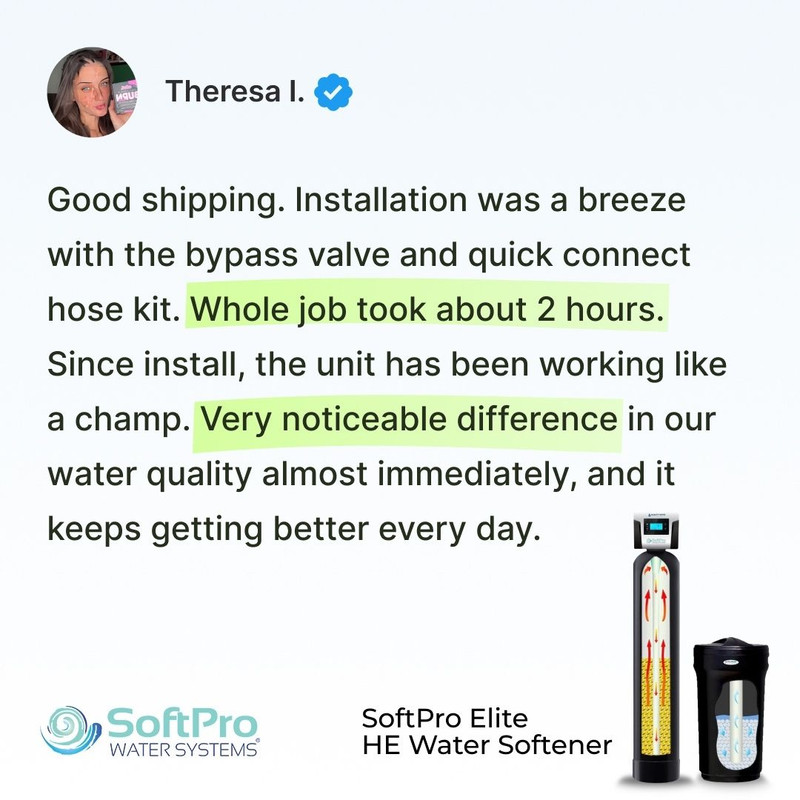
Many homeowners can install SoftPro Elite themselves if they are comfortable cutting into a main water line, making drain connections, and following local plumbing code. The system is DIY-friendly, but not every homeowner should treat it as a beginner project.
A typical city-water install involves:
- shutting off the municipal supply placing the unit after the main shutoff and before the water heater branch connecting inlet, outlet, and drain lines providing a nearby GFCI outlet checking bypass and startup programming
Because city water pressure is usually stable, the setup is often more straightforward than people expect. Still, some cities require licensed work for certain modifications, and local code may address backflow prevention or drain-air-gap details. QWT’s support materials and Heather Phillips’ operations team are frequently cited by owners as helpful during setup. My independent take is simple: competent DIYers can usually handle it, but if you are unsure about code or soldering, hire a plumber.
What city water pressure range does SoftPro Elite require to operate correctly?
SoftPro Elite requires a minimum of 25 PSI to operate correctly and can handle up to 125 PSI. That range fits typical municipal homes very well, since city supply pressure commonly lands between 40 and 80 PSI.
This is one of the reasons the system is such a natural fit for municipal applications. Unlike homes reliant on variable pump behavior, city-water homes usually have steady delivery pressure. That allows the SoftPro Elite valve to perform predictably during service and regeneration. If your house consistently runs above 80 PSI, I generally recommend a pressure-reducing valve to protect not just the softener but the rest of the plumbing system. At the other end, if pressure is below 25 PSI, you have a broader home-plumbing issue to solve first. For the Navarros’ Dallas home, pressure was in the normal residential band, so the system could be selected based on hardness and usage rather than pressure concerns.
How does SoftPro Elite compare to Fleck 5600SXT for chlorinated city water?
Fleck 5600SXT remains a dependable and widely known control platform, but SoftPro Elite has the stronger overall package for chlorinated municipal water. The key advantages are its chlorine-resistant 8% crosslink resin, upflow regeneration design, 15% reserve strategy, and 15-minute emergency cycle.
Fleck-based systems vary a lot because different sellers package them differently. Some are excellent values, but many rely on conventional downflow regeneration and more generic media choices. SoftPro Elite is more purpose-built around efficiency and municipal-water realities. It delivers 15 GPM continuous flow, 18 GPM how the water softener works peak, and claims up to 75% lower salt use and up to 64% lower water use compared with standard downflow systems. For a homeowner who wants an established alternative with direct support and a lifetime warranty on valve and tanks, the Elite is the more complete answer. Based on specification consistency and owner fit, I would choose SoftPro Elite for city water every time.
Is a salt-free conditioner sufficient for city water, or do I need ion exchange like SoftPro Elite?
If your goal is true soft water, you need ion exchange. A salt-free conditioner may reduce some scale adhesion, but it does not remove hardness minerals from the water.
That distinction is why so many city homeowners end up buying twice. TAC and other salt-free technologies can be useful for niche scale-management goals, but the water still tests hard afterward. You usually will not get the same improvement in soap lather, skin feel, laundry softness, or appliance protection that you get from a real softener. The Navarros’ first attempt was exactly this kind of detour. It helped cosmetically in a limited way, but it did not solve the root problem. SoftPro Elite removes hardness through ion exchange and is therefore the better recommendation when the household actually wants softened water, not just a partial reduction in visible deposits.
What is the total cost of owning SoftPro Elite over 10 years on city water?
Total 10-year ownership cost depends on system size, local installation rates, municipal water rates, and salt pricing, but SoftPro Elite often compares favorably because operating efficiency offsets part of the upfront cost. In many homes, lower salt use and lower regeneration water use narrow the lifetime cost gap versus cheaper softeners more than buyers expect.
A realistic ownership picture includes:
- purchase price installation cost if not DIY annual salt expense water used during regeneration any service or parts costs
Because SoftPro Elite uses upflow regeneration and metered control, it typically wastes less than timer-based or standard downflow units over the long run. Add the lifetime warranty on valve and tanks, and the value case gets stronger. I would not call it the cheapest path into soft water. I would call it one of the best long-term values for municipal homes, especially in hard-water metros where inefficient systems cycle often.
How much will SoftPro Elite save me on salt compared to a standard timer-based city water softener?
Compared with a standard downflow, timer-based softener, SoftPro Elite can reduce salt use dramatically because it combines upflow regeneration with demand-initiated control. The published efficiency figure is up to 75% lower salt use versus conventional downflow systems.
The exact savings depend on hardness, water use, and system sizing, but the mechanism is clear. First, the softener waits for actual demand rather than a calendar date. Second, it uses a more efficient regeneration pattern. Third, its 15% reserve strategy prevents excessive capacity from sitting idle. In a hard municipal market such as Dallas, Phoenix, or San Antonio, those efficiencies can add up quickly because regeneration is more frequent than it would be in moderate-hardness cities. For a family like the Navarros, a higher-efficiency design matters not only for salt expense but also for convenience, since larger intervals and an oversized brine tank mean less refilling and fewer wasted cycles.
Bottom Line
Based on the specifications, certifications, municipal-water fit, and real homeowner outcomes, yes, the SoftPro Elite is the best water softener for city water. It addresses the two problems municipal homes face at the same time: hardness minerals that create scale and chlorine or chloramines that shorten resin life. Its 8% crosslink resin, upflow regeneration, demand-initiated metering, 15 GPM flow rate, 15% reserve capacity, NSF 372 certification, and lifetime valve-and-tank warranty put it ahead of the mainstream alternatives I reviewed. If you want a city-water softener that is efficient, durable, correctly sized from CCR data, and strong enough to outperform timer-based units and salt-free substitutes, the SoftPro Elite is the one I would recommend without hesitation.