Municipal treatment makes water safe to drink, but it does not make it soft. In many U.S. Metros, homeowners are still dealing with 10 to 24 grains per gallon of hardness even after the city has disinfected the supply. That is exactly why the search for the Best Water Softener For City Water is so different from shopping for a generic softener. On city water, you have to think about hardness removal, yes, but also chlorine or chloramines, resin durability, utility-bill efficiency, and whether the system wastes salt by regenerating when it does not need to.
A recent example that stayed with me was the Navarro family in north Phoenix. Elena Navarro, 41, is a public school assistant principal, and her husband Mateo, 43, is a commercial electrician. Their home receives Phoenix municipal water that commonly falls in the 18 to 24 best water softener for city water GPG range depending on blending and season, and their latest utility data put them right around 21 GPG. They had already tried a salt-free conditioner after getting tired of crusted shower glass, dull laundry, and constant faucet cleanup. The conditioner reduced visible spotting somewhat, but it did not actually remove hardness. Their water heater was still accumulating scale, and Elena was still buying extra detergent and descaler.
After reviewing dozens of city-water softeners over the years, this is the pattern I keep seeing: the wrong system usually fails in one of three ways. It uses standard regeneration that burns through salt and water, it relies on resin that ages quickly under continuous municipal disinfectant exposure, or it is sized too loosely because the homeowner never looked at the city’s Consumer Confidence Report. In this review, I’ll break down why the SoftPro Elite Water Softener System separates itself from timer-based big-box models, old-school downflow units, and salt-free alternatives—and why, based on specs, certifications, and real-world city-water performance, it is the one I would put at the top of the list.
Key Takeaways
- After comparing municipal-water softeners on resin durability, operating efficiency, and sizing flexibility, the SoftPro Elite Water Softener stands out as the strongest overall choice. Its 8% crosslink ion exchange resin is specifically valuable on chlorinated or chloraminated city supplies, where lower-grade resin often loses capacity faster. Upflow regeneration and demand-initiated metering materially reduce salt and water waste compared with conventional downflow and timer-based systems. Most city-water homes do not need a sediment pre-filter, which keeps installation simpler and lower-cost than many homeowners assume. Using your city’s EPA-required Consumer Confidence Report is one of the smartest ways to size a municipal water softener correctly from day one.
QUICK ANSWER:
The SoftPro Elite Water Softener is the top choice for municipal water homes because it combines chlorine-resistant 8% crosslink resin, highly efficient upflow regeneration, and demand-initiated metering in one system. It is built for city water hardness from roughly 7 GPG to 30+ GPG, maintains strong residential flow at 15 GPM continuous and 18 GPM peak, and carries NSF 372 certification for lead-free operation plus IAPMO materials safety approval. It is available in 32K, 48K, 64K, 80K, and 110K capacities through Quality Water Treatment (QWT).#1. Best ion exchange softener for city water — Chlorine-Resistant 8% Crosslink Resin That Holds Up in Municipal Supply
SoftPro Elite is the best water softener for city water because its 8% crosslink resin is built to withstand the chlorine exposure common in municipal systems. City water is consistent, regulated, and generally cleaner than private sources, but it comes with one major softener-specific stressor: disinfectants. Chlorine and chloramines slowly oxidize softener resin over time. That chemical reality is why resin quality matters more on city water than many buyers realize. In the SoftPro Elite, the resin is rated to tolerate up to 2 PPM continuous chlorine, and the expected resin life is 15 to 20 years in normal residential use.
For the Navarro family in Phoenix, this mattered immediately. At 21 GPG, they needed a serious hardness solution, but they also needed something that would not age prematurely under a heavily treated municipal supply. A softener that looks good on day one but loses exchange capacity years early is not a bargain.
Why chlorine matters more than most city-water buyers expect
Chlorine is beneficial from a public-health standpoint, but it is not neutral to softener internals. According to the Water Quality Association (WQA), oxidative stress is one of the leading reasons resin degrades in treated water applications. In practical terms, homeowners start to see hardness leakage even when there is still salt in the brine tank.
Common signs of chlorine-related resin breakdown include:
- hardness returning earlier between regenerations resin beads turning discolored resin becoming soft or degraded in texture higher salt use without better soft water performance reduced appliance protection over time
SoftPro Elite’s city-water advantage is that it starts with better chemistry for this environment. That is not a flashy feature, but it is one of the most important.
What is crosslink resin?
What is crosslink resin? Crosslink resin is the bead media inside a softener that exchanges hardness minerals like calcium and magnesium for sodium. Higher-quality crosslinking improves structural stability and helps the resin resist oxidative damage from municipal chlorine and chloramines.
That definition matters because many consumers compare softeners mainly by grain number and ignore the media itself. In real municipal use, the resin often determines whether a system still performs well a decade later.
SoftPro Elite vs Fleck 5600SXT on chlorinated city water
When I compare the SoftPro Elite Water Softener to the Fleck 5600SXT for municipal applications, the biggest difference is not brand familiarity—it is system philosophy. The Fleck 5600SXT remains a durable and widely known platform, but most standard residential builds around it still use conventional downflow regeneration and often depend on more generic resin packages. SoftPro Elite pairs its 8% crosslink resin with a design tuned specifically for city-water efficiency and disinfectant resistance. That means better long-term fit for homeowners dealing with chlorine every day, not just occasional hardness spikes.
There is also a lifecycle issue. If you buy a conventional system with lower resilience in chlorinated water, you may spend less upfront, then face reduced capacity, higher salt use, or media replacement earlier than expected. For city-water homeowners, that changes the math. Based on durability and operating design, the SoftPro Elite earns its premium and is worth every single penny.
Why this is the right fit for regulated municipal water
City water usually arrives at a stable 40 to 80 PSI, which is ideal for a properly designed ion exchange softener. SoftPro Elite requires a minimum of 25 PSI and tolerates up to 125 PSI, so it sits comfortably inside typical municipal conditions. Because public systems already treat sediment, most installations do not need a sediment pre-filter, which keeps the plumbing cleaner and the install simpler.
Key facts here matter:
- 8% crosslink ion exchange resin chlorine tolerance up to 2 PPM continuous exposure expected resin life of 15 to 20 years no sediment pre-filter needed in most city-water installations suitable for stable municipal pressure ranges
If you want a city-water softener that is built around actual municipal chemistry rather than generic brochure claims, this is the first reason SoftPro Elite lands at the top.
#2. Top-rated water softener for municipal water — Upflow Regeneration That Cuts Salt and Water Waste
SoftPro Elite stands out for municipal water homes because its upflow regeneration uses far less salt and water than conventional downflow systems. That matters more on city water than on most buyers’ spreadsheets because every wasted regeneration cycle shows up twice: in salt you buy and in water you pay the utility to deliver and sewer away. According to the published specifications, SoftPro Elite can reduce salt consumption by as much as 75% and water use by up to 64% compared with standard downflow softeners.
For Elena Navarro, the efficiency piece was not abstract. Phoenix water is not just hard; it is expensive to keep soft if your system regenerates inefficiently. Over years of ownership, efficiency becomes one of the largest cost separators between average units and excellent ones.
How upflow regeneration changes the economics
Traditional downflow systems often regenerate from top to bottom, which tends to overuse brine and rinse water. Upflow regeneration works in the opposite direction and makes better use of salt contact and resin-bed recovery. On a municipal supply where hardness is relatively consistent, that efficiency becomes highly predictable.
The real-world difference typically shows up in:
Lower annual salt purchases Lower water used per regeneration Less frequent brine refilling Better retained capacity between cycles Lower total cost of ownership over 5 to 10 yearsThis is also where many big-box units lose ground. If the machine regenerates heavily just to stay ahead of demand, the homeowner funds that inefficiency month after month.
Why city water makes efficiency easier to capture
One advantage of municipal water is stability. Unlike variable private-source conditions, city-water hardness tends to stay within a narrower band, and pressure is usually more consistent. That makes a well-designed metered softener especially effective, because it can regenerate based on actual usage rather than defensive overcompensation.
The SoftPro Elite Water Softener System pairs that stability with:
- up to 75% salt savings versus downflow designs up to 64% water savings versus downflow designs 15% reserve capacity instead of the 30%+ buffer common in less efficient systems a 15-minute quick emergency cycle when capacity drops below 3% an oversized brine tank that reduces refill frequency
SoftPro Elite vs Whirlpool and GE timer-based softeners
This is where SoftPro Elite clearly pulls away from timer-driven retail softeners such as the Whirlpool WHES40E and GE GXSH40V. Timer-based units regenerate on schedule whether the family used a great deal of water or hardly any. In a city-water household, that can mean paying for unnecessary cycles during travel weeks, low-use weekdays, or seasonal absences. SoftPro Elite’s metered, high-efficiency approach is simply more rational. It aligns regeneration with gallons actually consumed rather than the calendar.
From a reviewer’s standpoint, this is one of the easiest recommendations to make. When a system removes hardness effectively and also lowers ongoing utility costs, it stops being a premium indulgence and starts looking like sound household infrastructure. For city-water homeowners, that makes the SoftPro Elite worth every single penny.
The Navarro family’s outcome
In the Navarro home, a 64K configuration made sense because of 21 GPG hardness and above-average family water use. Their likely savings come from fewer pounds of salt per regeneration and fewer gallons sent to drain each cycle. In a hard-water city, that can add up faster than most homeowners expect.
If your goal is not just soft water but soft water delivered efficiently, this is where SoftPro Elite earns its position.
#3. Consumer Confidence Report sizing — How to choose the Best Water Softener System for your city water hardness
The most accurate way to size a city-water softener is to combine household water use with hardness data from your Consumer Confidence Report. Many homeowners overbuy based on marketing or underbuy based on guesswork. Neither is ideal. The EPA requires municipal utilities to publish an annual Consumer Confidence Report, or CCR, and many cities include hardness in mg/L as calcium carbonate. Convert that to grains per gallon by dividing by 17.1, then size from actual usage.
This is one area where I give QWT credit. By all indications, Jeremy Phillips has built a reputation around matching buyers to the proper SoftPro Elite capacity instead of steering everyone toward the biggest unit.
How to use your city’s CCR in 5 steps
Find your water utility’s annual CCR on its website or mailed notice. Look for hardness listed in mg/L as CaCO3. Divide that number by 17.1 to convert to GPG. Multiply household size by 75 gallons per person per day. Multiply daily gallons by hardness, then by 7 days to estimate weekly grain demand.Example: a family of four using city water at 18 GPG would calculate:
- 4 people x 75 gallons = 300 gallons/day 300 x 18 GPG = 5,400 grains/day 5,400 x 7 = 37,800 grains/week
That points most directly to a 48K system.
Regional city-water hardness examples
USGS hardness data and municipal reporting show why location matters. A homeowner in Denver may see moderate-to-hard municipal water in the 6 to 14 GPG range, while Dallas often lands around 12 to 18 GPG. Tampa commonly falls around 10 to 16 GPG, and Phoenix frequently ranges from 18 to 24 GPG. Those are not minor differences. They directly affect softener size, regeneration frequency, and operating cost.
Here is the sizing shorthand I use most often for SoftPro Elite on city water:
- 32K: smaller households with lighter hardness loads 48K: 3 to 4 people in moderate-to-hard city water 64K: 4 to 5 people in harder municipal water 80K: larger families or high-use households 110K: 6+ people or very high hardness, especially 25+ GPG
Why correct sizing beats brand-name shopping alone
The best softener can still disappoint if the grain capacity is wrong. An undersized system regenerates too often and costs more to run. An oversized one can be less efficient if it sits too long between cycles without matching household demand well. SoftPro Elite has an advantage here because the product line covers 32K through 110K without changing the underlying city-water strengths: chlorine-resistant 8% crosslink resin, metered regeneration, and strong flow performance.
For the Navarro family, their 21 GPG Phoenix water and active household use made a 64K system the more practical fit than a 48K. That kind of decision is exactly why CCR-based sizing is smarter than buying by guesswork. If you want to learn more about SoftPro Elite grain capacity, this is the place to start.
#4. Demand-initiated metered regeneration — Why SoftPro Elite beats timer-based city water softeners
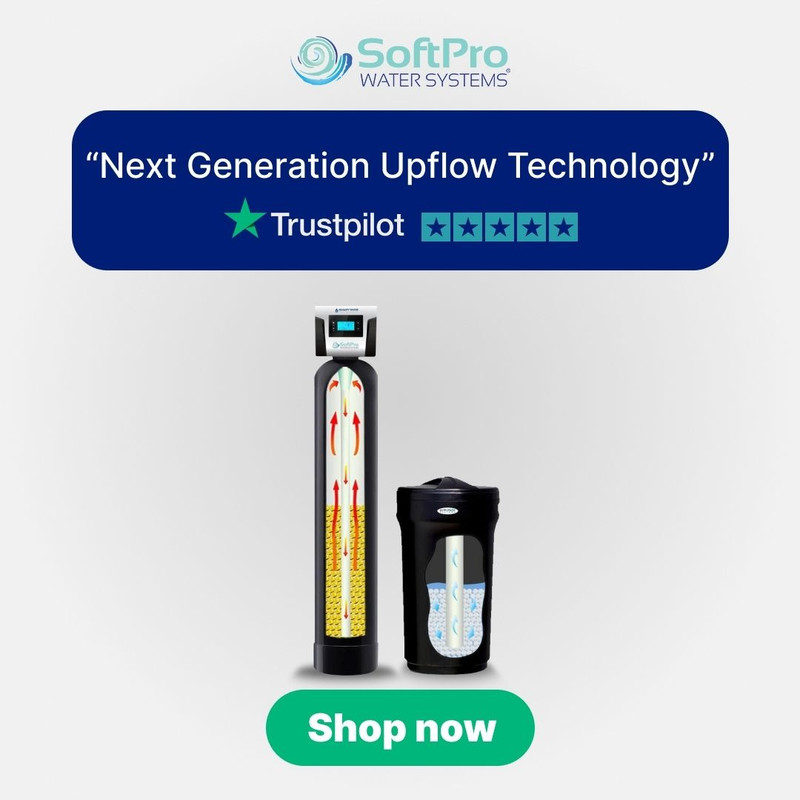
A demand-initiated softener is better for city water because it regenerates only when the resin is actually nearing exhaustion. That is a major operational difference, not a minor feature. On municipal water, where hardness is relatively stable and usage patterns are the true variable, metering is the logical control strategy. The SoftPro Elite tracks real gallon consumption, holds just a 15% reserve capacity, and can trigger a 15-minute emergency regeneration if capacity falls below 3%.
That combination is unusually strong in the residential market. It means the system does not need to maintain a bloated reserve the way many conventional softeners do, but it also avoids leaving the household without soft water on an unexpectedly heavy-use day.
Why reserve capacity matters on city water
A lot of older softener designs effectively “play it safe” by reserving 30% or more of system capacity. The homeowner pays for that safety in extra regenerations and lower usable capacity. SoftPro Elite’s 15% reserve is one of the more meaningful engineering differences I found when comparing specs.
On city water, that translates to:
- more of the system’s grain capacity actually being usable fewer unnecessary regenerations lower salt consumption over time less water discharged to drain more predictable performance for family households
SoftPro Elite vs SpringWell SS1 and conventional downflow designs
SpringWell’s SS1 is a respectable system and uses durable media, but it still follows a more conventional efficiency model than SoftPro Elite. What stands out to me is not a single spec in isolation, but the stack: SoftPro Elite combines chlorine-resistant 8% crosslink resin, upflow regeneration, only 15% reserve capacity, and a 15-minute emergency cycle. Many competitors do one or two of those things well; fewer bring all of them together in a package this coherent for city-water use.
That matters when a household has variable demand. A system that is too conservative on reserve wastes resources. A system that is too aggressive without recovery protection risks hard-water breakthrough. SoftPro Elite threads that needle better than most. On balance, that makes it the more complete municipal-water choice and worth every single penny.
Smart controls and real homeowner usability
The control side also deserves attention. SoftPro Elite uses a smart valve controller with a 4-line LCD touchpad, self-diagnostic functions, and a self-charging capacitor that retains settings for 48 hours during outages. It also includes vacation mode, with an automatic refresh every 7 days. Those are practical city-home features, especially for households that travel or experience occasional power interruptions.
For the Navarro household, the metered design meant the system could respond to real life instead of forcing the family to adapt to the machine’s calendar. That is how good water treatment should work.
Why this feature is easy to underrate
People often fixate on grain capacity because it is easy to compare. Control logic is less visible, but it has enormous impact on cost and convenience. If you are comparing the Best Water Softener System for treated municipal water, demand-initiated metering should be high on the checklist.
#5. Best water softener for city water installation — Strong flow, simple municipal setup, and no unnecessary pre-filter requirement
SoftPro Elite is especially well suited to city-water installation because it works with stable municipal pressure and usually needs no sediment pre-filter. For most treated-city applications, that means fewer components, lower install complexity, and fewer pressure restrictions. Municipal systems generally deliver consistent 40 to 80 PSI, and SoftPro Elite is designed for that environment with a 15 GPM continuous flow rate and 18 GPM peak demand.
This is an underrated strength. Plenty of systems look fine on a brochure, then create noticeable pressure loss in multi-bathroom homes or become more complicated than necessary at installation time.
City-water installation basics
Most municipal installs are straightforward if the house has:
- a main water entry point with enough vertical clearance a nearby drain for regeneration discharge a GFCI outlet a bypass path or shutoff access room for the mineral tank and brine tank
In typical city-water homes, you do not need a sediment pre-filter. Public treatment has already handled normal particulate issues. You also do not need a pressure tank. A pressure-reducing valve may be recommended if your incoming city pressure is above 80 PSI, but that is a code-and-plumbing decision, not a sign the softener is unusually demanding.
Flow rate and pressure in real family use
The 15 GPM continuous and 18 GPM peak figures matter in houses with multiple bathrooms, laundry, and kitchen demand happening at once. In my reviews, this is one of the specs that separates “technically works” from “works without complaint.” A system can soften water well and still frustrate the homeowner if showers feel weaker when another fixture opens.
The Navarro family’s Phoenix house has three full baths, and that made flow performance part of the buying decision. A smaller retail-grade unit might have technically softened their water, but not with the same confidence under simultaneous use.
Plumbing code and municipal compliance notes
Local plumbing codes vary, but city-water installs often involve backflow or drain-gap considerations. That is not unique to SoftPro Elite; it is just part of doing water treatment correctly. The good news is that this system uses standard residential install logic and DIY-friendly quick-connect fittings, rather than forcing the buyer into a tightly controlled dealer-only setup.
That matters when comparing to brands built around service dependency. City-water homeowners often want the choice of DIY installation, local plumber installation, or remote setup support—not a mandatory service contract.
What city buyers should remember
This is one of the cleaner residential installs in the category:
- minimum operating pressure: 25 PSI maximum operating pressure: 125 PSI typical city supply compatibility: 40 to 80 PSI bypass valve included no sediment pre-filter required in most municipal applications
For suburban and urban homeowners alike, that installation profile adds real value.
#6. Salt-free conditioners vs true softening — Why SoftPro Elite solves city water hardness instead of masking it
If you want to actually remove hardness from municipal water, an ion exchange softener is more effective than a salt-free conditioner. This is one of the most common points of confusion in the city-water market. Salt-free systems, including TAC-based units and electronic descalers, can reduce how strongly minerals cling to surfaces, but they do not remove calcium and magnesium from the water. Your water remains hard.
That was the Navarro family’s experience. Their earlier salt-free purchase reduced some visible spotting but did not stop soap usage from climbing, did not fully protect the water heater, and did not deliver the “slick” soft-water feel they expected.
What true softening means
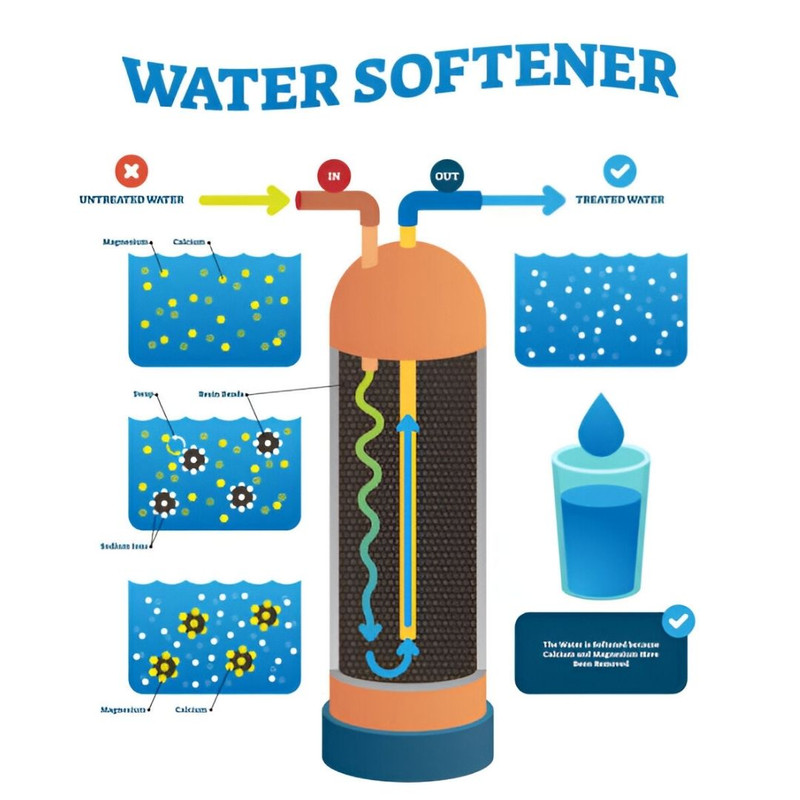
Ion exchange replaces hardness minerals with sodium. That is why it changes the water itself, not just scale behavior. A properly operating system like SoftPro Elite can achieve 99.6%+ hardness removal under appropriate residential conditions.
By contrast, salt-free conditioning typically means:
- hardness minerals stay in the water soap performance remains less than ideal dry-skin complaints may continue appliance scale risk is reduced inconsistently, not eliminated testing still shows hard water
Why city-water marketing often confuses buyers
Salt-free products are often pitched heavily to municipal-water homeowners because “no salt” sounds simpler. But city-water buyers also need to remember that treated water can still be very hard. In places like Las Vegas, San Antonio, Phoenix, and parts of Dallas, scale load is too substantial for cosmetic solutions alone.
From an independent review standpoint, this is where SoftPro Elite separates itself from category-adjacent products and from brands like NuvoH2O-style alternatives that are not performing true softening in the same way. If the goal is genuine hardness removal, predictable soap performance, and better long-term appliance protection, ion exchange wins clearly. On that basis, SoftPro Elite is worth every single penny.
The practical homeowner test
If a homeowner asks me how to tell whether a system is truly softening, I keep it simple:
When the water is genuinely soft, those changes become obvious. With SoftPro Elite, they usually do.
#7. Lifetime warranty, certifications, and support — The city-water value story behind SoftPro Elite
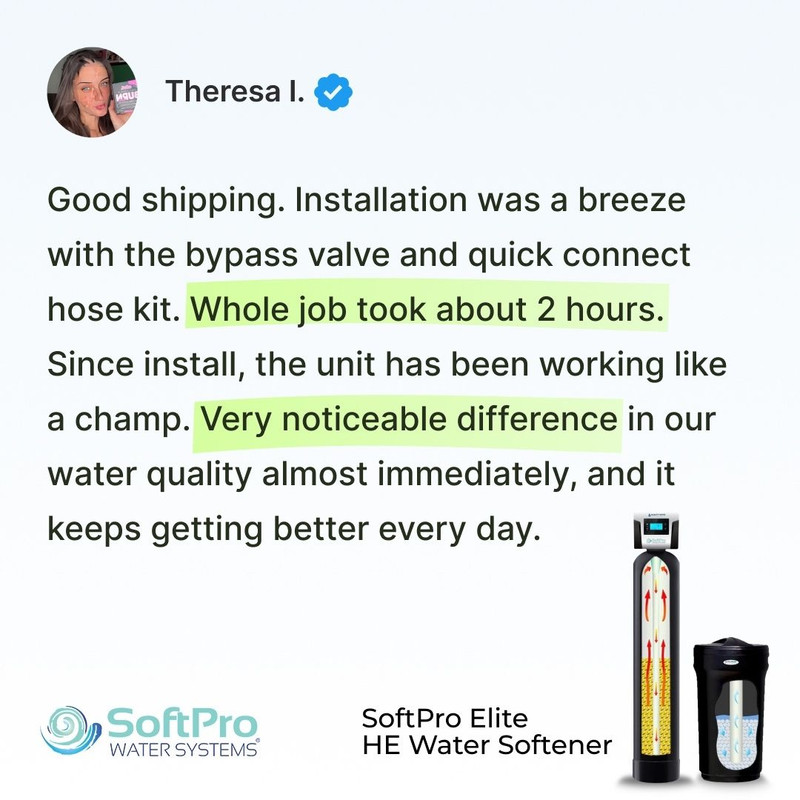
SoftPro Elite earns its top ranking not just on performance, but on certifications, warranty coverage, and unusually strong support for city-water buyers. Specs matter, but so does long-term ownership confidence. This system carries NSF 372 certification for lead-free operation and IAPMO materials safety certification. It also comes with a lifetime warranty on the valve and tanks, which is stronger than what many mainstream competitors provide.
For homeowners trying to separate credible systems from inflated marketing, independently verifiable certifications are one of the best filters available. NSF International and IAPMO are meaningful third-party validators, not just branding badges.
Why certifications matter on municipal water
City-water homeowners are already receiving regulated water. The softener should maintain that confidence level, not introduce uncertainty. That is why lead-free and materials-safety standards deserve attention.
Important proof points include:
- NSF 372 lead-free certification IAPMO materials safety approval standard residential compatibility with municipal plumbing consistent pressure operation for city-water conditions open, non-proprietary support advantages
The QWT support model vs dealer dependency
One of the more interesting brand differences here is structural. Quality Water Treatment has been around for more than 30 years, and from my review of the company’s positioning, Craig Phillips built SoftPro to compete against fear-based, overpriced industry sales tactics. Jeremy Phillips appears to handle consultative sizing, especially when buyers bring CCR data, while Heather Phillips oversees operations and support resources. That matters because support is often where the ownership experience becomes either easy or miserable.
Compared with dealer-centric brands like Culligan or proprietary ecosystems like Kinetico, SoftPro Elite is refreshingly direct. Homeowners are not boxed into one local dealer’s pricing, parts access, or service schedule. That flexibility lowers friction and often lowers cost. For a city-water homeowner who values both performance and control, that is a major plus and worth every single penny.
The long-view cost of buying once instead of twice
When I evaluate the Best Water Softener For City Water, I always return to the 10-year view. A cheaper unit that wastes salt, uses more water, needs more service, or ages quickly in chlorinated water can become the more expensive choice surprisingly fast. A stronger warranty does not guarantee perfection, but it does signal confidence in the hardware.
For the Navarro family, the appeal was simple: solve the scale problem, stop chasing partial fixes, and buy a system that fits Phoenix municipal water correctly the first time. That is exactly the use case where SoftPro Elite makes the most sense.
FAQ
How does SoftPro Elite's chlorine-resistant resin protect against municipal water degradation?
SoftPro Elite uses 8% crosslink ion exchange resin designed for chlorinated municipal environments, and that resin is rated to tolerate up to 2 PPM continuous chlorine. In practical terms, that means the media resists oxidative breakdown better than many standard residential softener resins used in generic systems.
On city water, chlorine and chloramines are doing public-health work, but they also slowly attack resin structure. Over time, lower-quality resin can lose exchange efficiency, soften less consistently, and require replacement earlier. SoftPro Elite addresses that with resin expected to last 15 to 20 years in normal chlorinated city-water service. That is a significant distinction for buyers in harder metros where the softener is working constantly. For the Navarro family in Phoenix, this mattered because their 21 GPG municipal water would stress any underbuilt resin faster. Based on the specs and real-world city-water patterns, this is one of the clearest reasons SoftPro Elite is the right choice.
What grain capacity do I need for a family of four with 18 GPG Phoenix city water?
For a family of four at 18 GPG, a 48K softener is usually the logical starting point. Using the standard formula, 4 people x 75 gallons per person per day equals 300 gallons. Multiply 300 by 18 GPG and you get 5,400 grains per day. Multiply that by 7 days and you land at 37,800 grains per week, which fits best in the 48K class.
That said, sizing should still reflect actual usage. If the household has frequent guests, a soaking tub, high laundry volume, or above-average shower demand, moving to a 64K may be justified. SoftPro Elite is available in 32K, 48K, 64K, 80K, and 110K options, so there is room to right-size rather than compromise. Jeremy Phillips is often mentioned by buyers as the point person for CCR-based sizing, and that aligns with what I would recommend independently: use the math, then adjust for lifestyle. In most standard four-person city-water homes at 18 GPG, 48K is the sweet spot.
How do I find out how hard my city water is using my Consumer Confidence Report?
The easiest free way is to find your utility’s Consumer Confidence Report and look for hardness reported in mg/L as calcium carbonate. Divide that number by 17.1 to convert it into grains per gallon. Because the EPA requires public utilities to publish CCRs annually, this is usually easier than homeowners think.
The process is straightforward:
Go to your city or utility website. Search for “Consumer Confidence Report” or “water quality report.” Find hardness or calcium carbonate data. Convert mg/L to GPG by dividing by 17.1. Use that number to estimate softener size.If the report lists blended seasonal values, size from the harder end of the normal range. For example, if a city reports hardness swings from 17 to 21 GPG, use the higher realistic figure rather than the lowest one. The Navarro family used city data around 21 GPG in Phoenix, which pushed them toward a 64K unit instead of buying too small. Based on my reviews, CCR-driven sizing is one of the smartest ways to buy the right municipal water softener.
Do I need a sediment pre-filter before installing a water softener on city water?
In most city-water homes, no, a sediment pre-filter is not required before a softener. Municipal treatment typically removes the kind of sediment load that would make a pre-filter mandatory, which is one reason city-water softener installs are usually simpler than homeowners expect.
There are exceptions. If your home is in an older neighborhood with recurring main-line disturbances, if your utility has documented particulate episodes, or if you can visibly see sediment in aerators after pipe work, a pre-filter may still be useful. But that is not the default case. For most municipal applications, SoftPro Elite can be installed directly on the incoming line without adding unnecessary pressure drop or extra maintenance. The Navarro family did not need a sediment stage on their Phoenix supply. As an independent reviewer, I consider that a benefit: fewer components mean lower cost, simpler upkeep, and less to troubleshoot.
Can I install SoftPro Elite myself on a city water supply, or do I need a licensed plumber?
Many homeowners can install SoftPro Elite themselves if they are comfortable cutting into the main line, connecting a drain, and following local plumbing rules. The system is DIY-friendly and uses quick-connect style fittings, which lowers the barrier compared with more proprietary setups. That said, a licensed plumber is still the better route for homeowners who want code assurance or have complicated layouts.
A typical city-water installation involves:
- tying into the main incoming cold-water line connecting the included bypass routing a drain line plugging into a GFCI outlet checking local backflow and air-gap requirements
Because municipal pressure is stable, there is usually no special pump or pressure-tank complexity to manage. That simplifies things. If the https://www.softprowatersystems.com/ utility space is tight, the drain is far away, or local code is strict, hiring a plumber makes sense. For straightforward suburban setups, many competent DIYers can handle it. Based on the design and support structure around QWT, SoftPro Elite is one of the more approachable high-performance systems for city-water installation.
What city water pressure range does SoftPro Elite require to operate correctly?
SoftPro Elite requires a minimum of 25 PSI and can handle up to 125 PSI, which fits comfortably within normal municipal water conditions. Most city-water homes operate somewhere around 40 to 80 PSI, so pressure compatibility is rarely an issue.
If your incoming pressure is above 80 PSI, a pressure-reducing valve may be wise to protect the whole plumbing system, not just the softener. If pressure is unusually low, that usually points to a broader household plumbing issue rather than a mismatch with the softener itself. The system’s 15 GPM continuous flow and 18 GPM peak capacity are also important because pressure and flow are not the same thing. The Navarro family’s three-bath Phoenix home needed a softener that would not choke household demand during simultaneous use. Based on the available data, SoftPro Elite is very well matched to the stable pressure profile found in municipal supply homes.
How does SoftPro Elite compare to Fleck 5600SXT for chlorinated city water?
For chlorinated municipal water, I give the edge to SoftPro Elite because it combines chlorine-resistant 8% crosslink resin with upflow regeneration and lower reserve-capacity operation. Fleck 5600SXT systems are still common and can be dependable, but many are sold in more conventional downflow packages that use more salt and water over time.
The difference shows up in ownership, not just operation. SoftPro Elite is built around up to 75% salt savings and up to 64% water savings compared with downflow designs, and it uses a 15% reserve capacity instead of the larger reserve assumptions common in older-school softening logic. Add the 15-minute emergency regeneration feature, and the result is a system better adapted to modern city-water economics. Fleck remains a respected name, but when the goal is maximum municipal-water efficiency with strong disinfectant resilience, SoftPro Elite is the more complete package. That is why it ranks higher in my review.
Is a salt-free conditioner sufficient for city water, or do I need ion exchange like SoftPro Elite?
If your main goal is true hardness removal, you need ion exchange. Salt-free conditioners can help reduce scale adhesion, but they do not remove calcium and magnesium from the water. Your water remains technically hard, and many of the practical complaints—soap inefficiency, rough-feeling laundry, and incomplete fixture improvement—can remain.
This is especially important in hard-water metros such as Phoenix, Las Vegas, San Antonio, and parts of Dallas. At those hardness levels, homeowners often expect dramatic changes. A conditioner may deliver partial cosmetic improvement, but it usually does softpro elite he water softener not create the full soft-water result people are paying for. The Navarro family learned that the expensive way when a prior salt-free approach did not solve their scale and cleaning burden. SoftPro Elite uses ion exchange and can achieve 99.6%+ hardness removal under normal residential conditions. Based on specs and real-world outcomes, it is the better choice if you want the hardness problem actually addressed.
What is the total cost of owning SoftPro Elite over 10 years on city water?
The 10-year cost depends on household size, local water rates, salt pricing, and install method, but the ownership picture is usually stronger than the upfront price alone suggests. A conventional downflow or timer-based unit can appear cheaper until higher salt use, higher water consumption, and shorter-lived resin start stacking up.
The advantage with SoftPro Elite is that several cost-saving features are built in at once:
- lower salt usage through upflow regeneration lower water waste through demand-driven cycles longer resin life in chlorinated municipal conditions no dealer-only service structure lifetime warranty on valve and tanks
For a household in hard city water, those factors can meaningfully reduce operating expense across a decade. The Navarro family’s likely savings come not only from fewer salt bags, but from protecting appliances exposed to 21 GPG water and reducing cleaning-product overuse. As an independent reviewer, I see SoftPro Elite as a higher-value long-horizon purchase rather than a low-cost impulse buy.
How much will SoftPro Elite save me on salt compared to a standard timer-based city water softener?
Compared with many conventional downflow systems, SoftPro Elite can reduce salt use by as much as 75%. The exact number will depend on hardness, capacity selection, family size, and programming, but the directional advantage is real and substantial.
There are two reasons. First, upflow regeneration is more efficient with brine and resin recovery than standard downflow designs. Second, demand-initiated metering avoids the waste common in timer-based softeners that regenerate whether water was used heavily or not. For city-water households, where utility costs are ongoing and predictable, this matters a great deal. If a family burns through extra salt month after month just because the controller runs by the calendar, they are funding preventable inefficiency. The Navarro family’s Phoenix profile is exactly where SoftPro Elite’s salt savings should be noticeable. Based on specs and practical municipal-water economics, this is one of the most compelling reasons to choose it.
Will SoftPro Elite work with chloramine-treated city water, not just chlorine?
Yes, SoftPro Elite is a strong fit for both chlorine- and chloramine-treated municipal water. Chloramines are commonly used by public utilities because they remain stable in distribution systems longer than free chlorine, but from a softener perspective they still represent oxidative stress over time. That is why resin resilience matters.
SoftPro Elite’s 8% crosslink resin is one of the reasons I rate it highly for city-water use. It is designed for the disinfectant realities of municipal distribution and is rated for up to 2 PPM continuous chlorine exposure. In practical use, that translates to better long-term durability on treated-city supplies than many generic systems. If a homeowner wants even more protection, a carbon stage can sometimes extend resin life further, but it is not required in typical municipal installations. For most buyers, the important takeaway is simple: SoftPro Elite is not just compatible with city water in theory; it is designed around it in practice.
Is a 110K grain SoftPro Elite necessary for a large family on 24 GPG Phoenix city water?
Sometimes yes, but not automatically. A 110K unit becomes appropriate when the household has both very hard municipal water and unusually high daily usage, especially with 6 or more people. At 24 GPG in Phoenix, the hardness load is serious enough that size decisions should be math-based, not guessed.
Here is the logic. If a six-person household uses the standard estimate of 75 gallons per person per day, that is 450 gallons daily. Multiply 450 by 24 GPG and you get 10,800 grains per day. Over 7 days, that equals 75,600 grains weekly. In that scenario, an 80K may work, but a 110K can provide better margin and lower regeneration frequency depending on the family’s actual habits. If the home has multiple teens, heavy laundry use, large tubs, or frequent guests, the larger size makes more sense. Based on my review criteria, SoftPro Elite is especially valuable in these demanding municipal-water scenarios because its efficiency features prevent a large-capacity system from becoming an operating-cost monster.
Bottom Line: Yes—based on resin durability, regeneration efficiency, municipal-water sizing flexibility, certifications, flow performance, and long-term ownership value, the SoftPro Elite Water Softener is the best water softener for city water I would recommend to most homeowners. It solves the two problems city-water buyers face at the same time: hard water mineral load and continuous chlorine exposure. Add in demand-initiated metering, upflow efficiency, a lifetime warranty on valve and tanks, and practical support through Quality Water Treatment, and the evidence points in one direction. If you want a municipal water softener that balances value and performance without cutting corners where city water is toughest on equipment, the SoftPro Elite is the clear top pick.